
A “braided brake hose kit” is usually two or four pre-made lines and a bag of banjo bolts and crush washers, sized to replace every rubber flex hose on the car in one pass. That’s the whole idea behind buying a kit instead of a single line: front calipers, rear calipers (or the axle hose on a live rear end), and sometimes a clutch hose if the car has a hydraulic clutch running off the same master cylinder reservoir. Get the count and the lengths right before you order, because a kit that’s one line short means a second shipping wait with the car up on stands.
What’s actually in the box
A proper kit for a car with four-wheel disc brakes ships four lines: two front (caliper to hard line, one per side) and two rear (caliper or axle fitting to hard line, one per side). A car with rear drums usually needs one line total on the rear axle, feeding a junction block that splits to each wheel cylinder through the factory hard lines, so a “four line” kit on a drum-rear car is really three. Each line comes with a banjo bolt and a pair of copper crush washers already sized for it, one washer on each side of the banjo fitting. Reuse a crush washer and you get a fluid weep at the banjo within a few hundred miles once the soft copper takes a second compression set that doesn’t seal as well as the first.
The hose itself is almost always -3AN, meaning 3/16″ inside diameter, across everything from a Miata to a full size truck. Flow at a caliper is small enough that one hose size covers the range; if a kit offers a bigger diameter, it’s meant for something else, not the brake line.
Length matters more than most people expect
A braided line is fixed length end to end, unlike a rubber hose that can stretch a little under a tight routing. Order one that’s a quarter inch too short and it either doesn’t reach the banjo bolt at the caliper through full suspension travel, or it does reach but goes into tension at full droop and starts working the banjo loose over time. Order one too long and it can rub against a control arm, a sway bar end link or a tire at full lock, which wears through the braid from the outside in.
Measure the factory rubber hose being replaced, end fitting to end fitting, not the overall hose including any bracket loop. Most kits are sold by make and model rather than by length, and a kit built for the stock ride height won’t be correct if the car has been lowered or the suspension has been changed, since ride height changes how much the hose has to reach at full droop. If the car’s been modified, measure the actual hose currently on it rather than trusting the kit’s stated fitment.
End fittings: banjo at the caliper, flare at the hard line
The caliper end is almost always a banjo fitting, a hollow bolt that passes fluid through its own center and out a cross-drilled hole into the caliper body, sealed by the crush washers on either side. The hard-line end is a male flare fitting, and the thread there depends on the car: 10mm x 1.0mm is the most common on modern and Japanese or European calipers, 7/16-20 UNF and 3/8-24 UNF are common on American cars and a lot of aftermarket calipers, and older British cars run 3/8-20 BSF at the T-block or bracket. Check which thread the car’s factory hard line actually uses before ordering, because a kit is machined for one thread and won’t be adapted at the counter.
The cut that ruins a braided line before it’s even installed
Most kits arrive as finished, pre-fitted lines, but a fair number of installers end up trimming a hose themselves, either shortening a universal length or cutting a factory rubber hose off flush to reuse its bracket. Whatever the reason, a hacksaw or a utility knife is the wrong tool for it. A hacksaw crushes the outer braid as the blade bites, and the loose strands it leaves behind catch and fray every time the hose flexes afterward, which is exactly the kind of slow damage that doesn’t show up until the braid starts shedding threads a year later. A utility knife does the same thing to the rubber liner underneath: it compresses the hose wall instead of shearing it, so the cut end comes out oval instead of round, and an oval end doesn’t seat evenly against a fitting or ferrule no matter how hard you tighten it down.
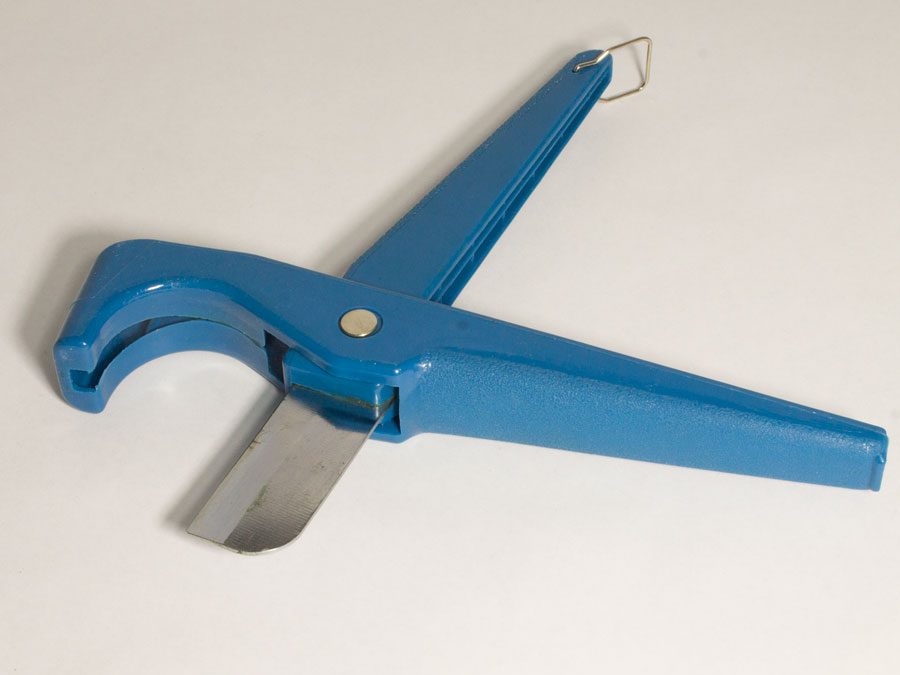
What you actually want is a cut that’s square to the hose and round, with the braid trimmed clean instead of smashed flat. That’s what the BrakeQuip BQ2102 Brake Hose Cutter is built for. It closes around the hose and shears through rubber and braided line in one motion instead of sawing or slicing, so the end stays round and square instead of crushed, which is what lets a new fitting or ferrule seal against it on the first try instead of the third.
Bleeding after the swap
Every new banjo fitting introduces a small air pocket that a normal bleed sequence sometimes misses, especially at a caliper mounted with the banjo bolt facing down. Crack the banjo bolt itself slightly while a helper holds light pedal pressure, let a bead of fluid push out around the bolt threads, then snug it back down before moving to the bleeder screw. Skipping that step is the most common reason a fresh braided line install still has a soft pedal after a full bleed. Bleed each corner in the normal sequence afterward, farthest from the master cylinder first, and check the pedal firms up before the car goes back on the ground.