
by | Sep 7, 2026 | Brake Tools
Most copper pipe doesn’t get soldered, it gets flared. Gas appliance connections, icemaker lines, small refrigerant lines, a lot of code work in general, all use a mechanical flare and a fitting instead of a torch. If you’re staring at a coil of soft...
by | Sep 5, 2026 | Brake Tools
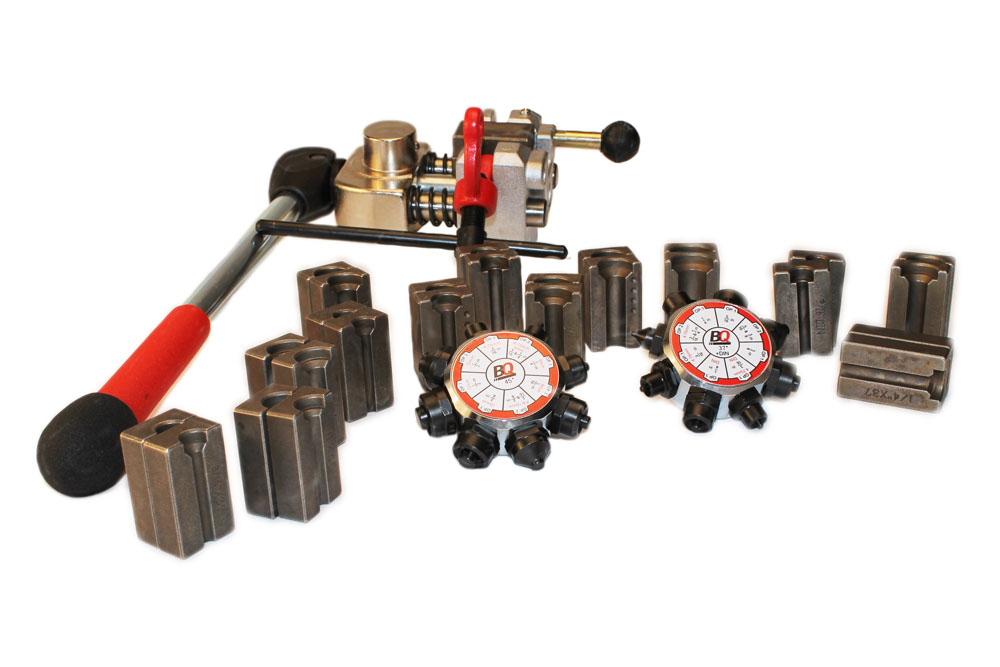
A flaring tool and a flare kit aren’t the same purchase. A tool is the ram and yoke that does the clamping. A kit is that tool plus the set of dies, adaptors and pilots that actually let it flare more than one size or shape. Search for “flare kit...
by | Sep 4, 2026 | Brake Tools
The tool matters more than the tube. Almost any flaring tool will make something that looks like a flare. Whether that flare holds 1,200 PSI without weeping fluid at 2am on the highway comes down to the tool, not the technique, once you’ve got the basics down....
by | Aug 29, 2026 | Brake Tools
Short answer: cut square, deburr, run the flare nut on first, then flare in stages with the right die for your fitting standard. Skipping any one of those four steps is where most home-built brake lines go wrong. Know your flare standard before you start Not all...

by | Aug 29, 2026 | Brake Tools
Short answer: for SAE brake line, use double flare, the tube end is folded over on itself to double the wall thickness at the sealing surface, which is what a brake fitting is actually designed to clamp against. Single flare is a different, thinner shape used on other...

by | Aug 29, 2026 | Brake Tools
Short answer: a stuck or rounded-off bleed screw doesn’t have to mean a new caliper. A dedicated bleed-screw removal tool grips or drives out a screw that’s seized or already had its hex rounded off by a wrench, which is one of the most common ways a...
